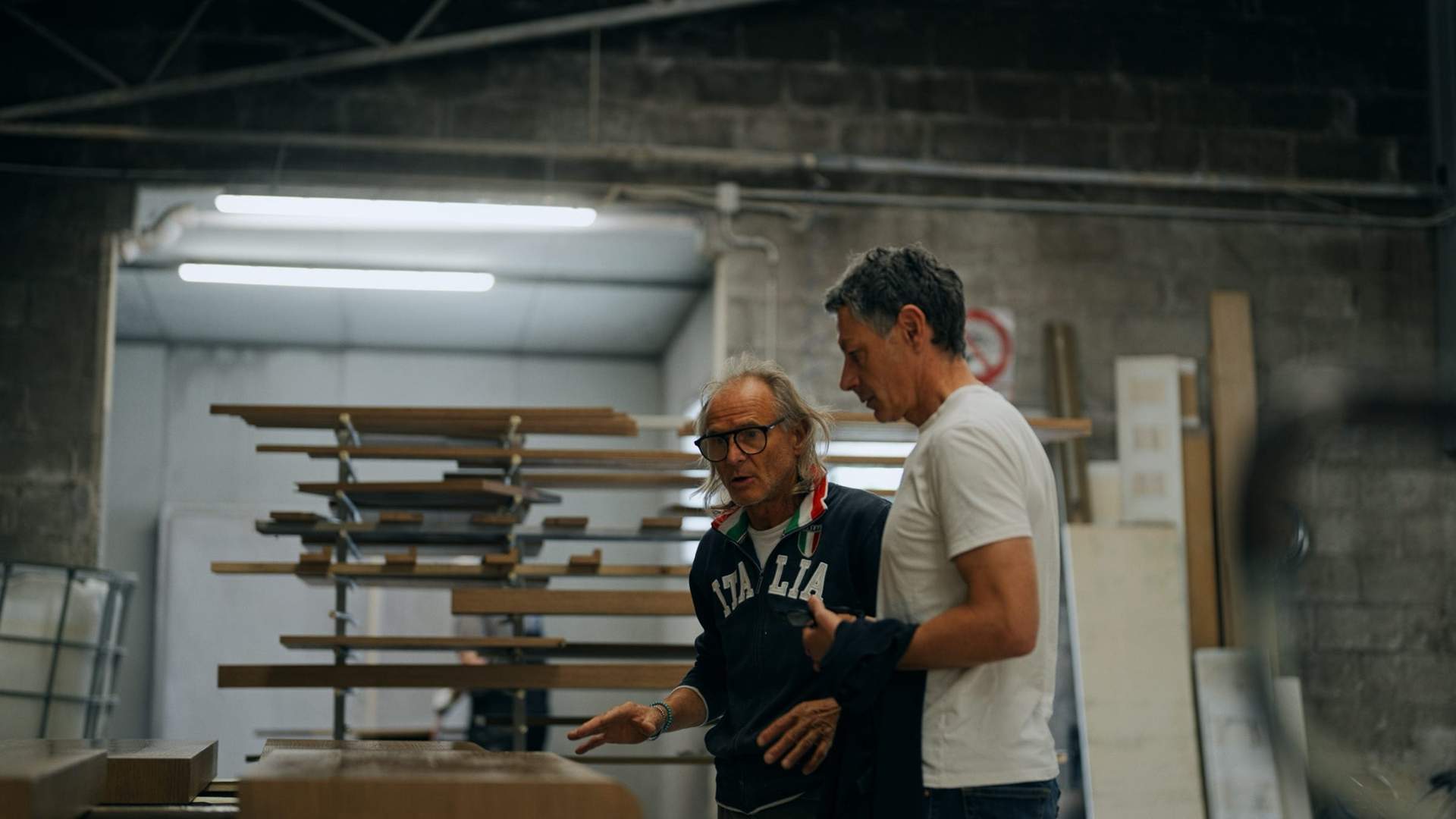
Where matter becomes a project

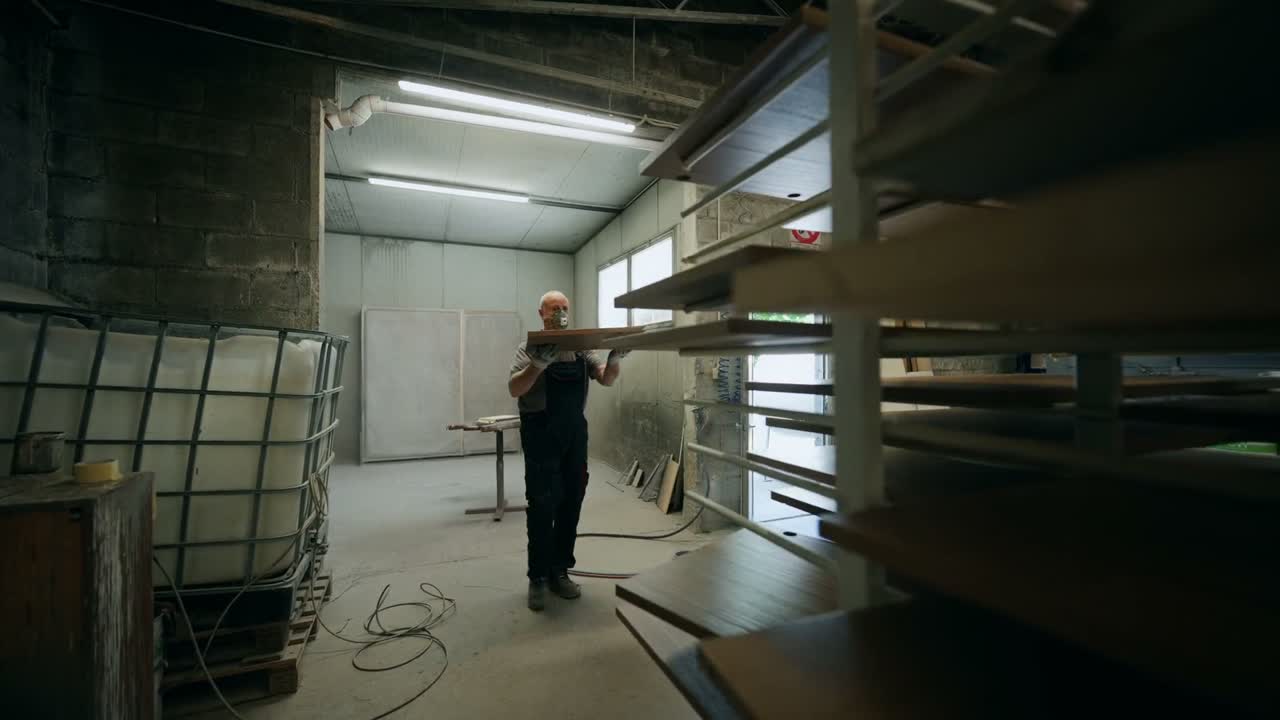
A bespoke piece is not decided on the drawing. It is decided on the shop floor, in the four moments when the panel is cut, sealed, folded and assembled. Each one leaves a mark that stays for the life of the piece.

Our craftsmanship

01

CNC cutting

From the shop drawing to the real component, within millimetric tolerances.

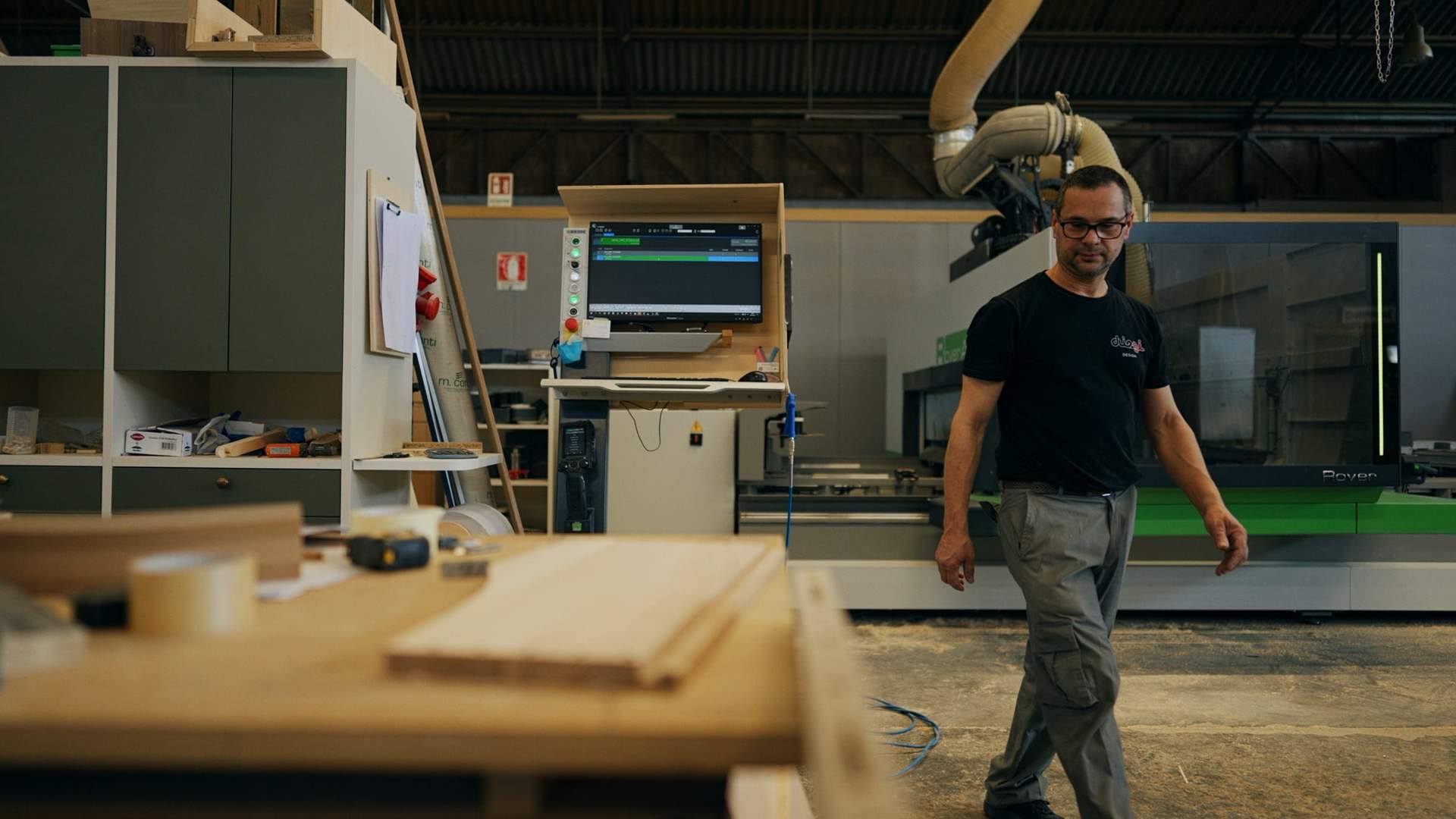
This is where the project stops being a file and becomes matter. Every panel is nested from the approved shop drawings, optimising the cut to reduce waste and to place the grain exactly where the design asks for it: across a continuous front, on a book-matched door, along a wall panel that has to read as a single piece.

We work to millimetric tolerances because everything downstream depends on them: a component that leaves the machine out of spec multiplies its error through edge banding, assembly and finally on site. Hardware housings, holes, joints and technical recesses are all machined at this stage, so installation never needs manual adjustment.

Every run is validated on a sample before it starts and checked again during production: digital precision only counts if the machine is working the right material, with the right tool, from the latest approved revision of the drawing.
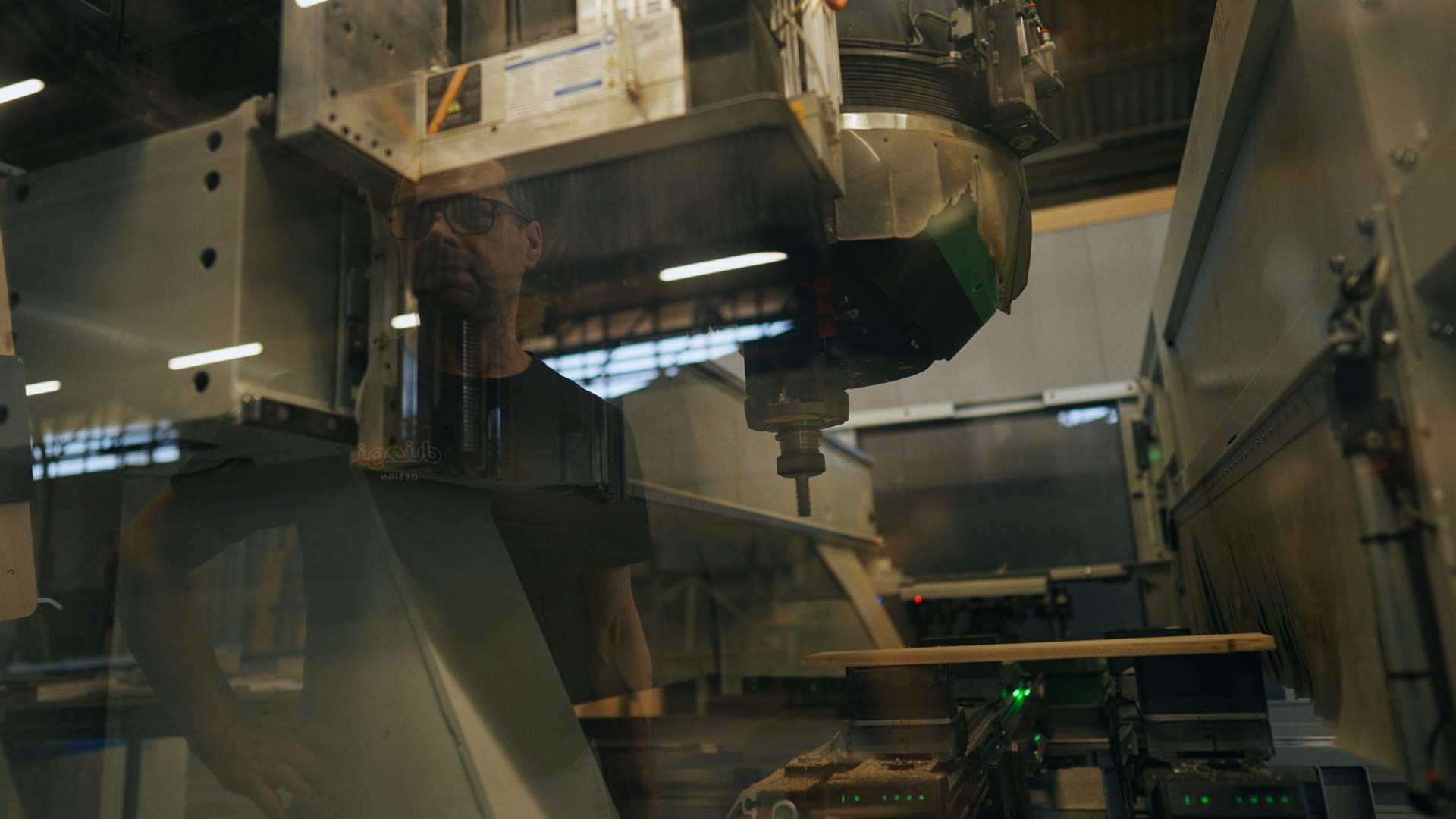
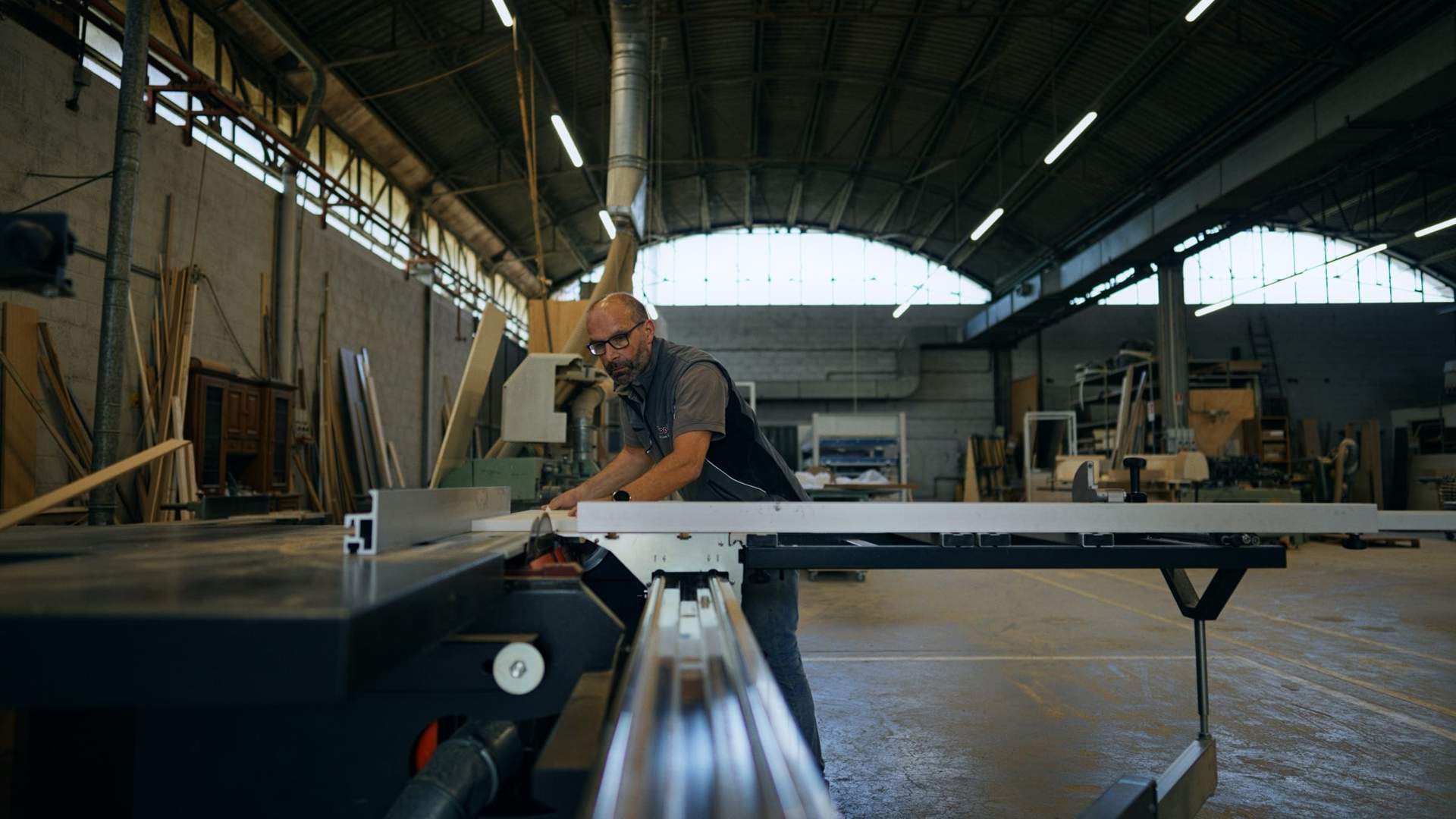
CNC cutting
02

Edge banding

The edge that protects the panel and closes the design with no visible seam.

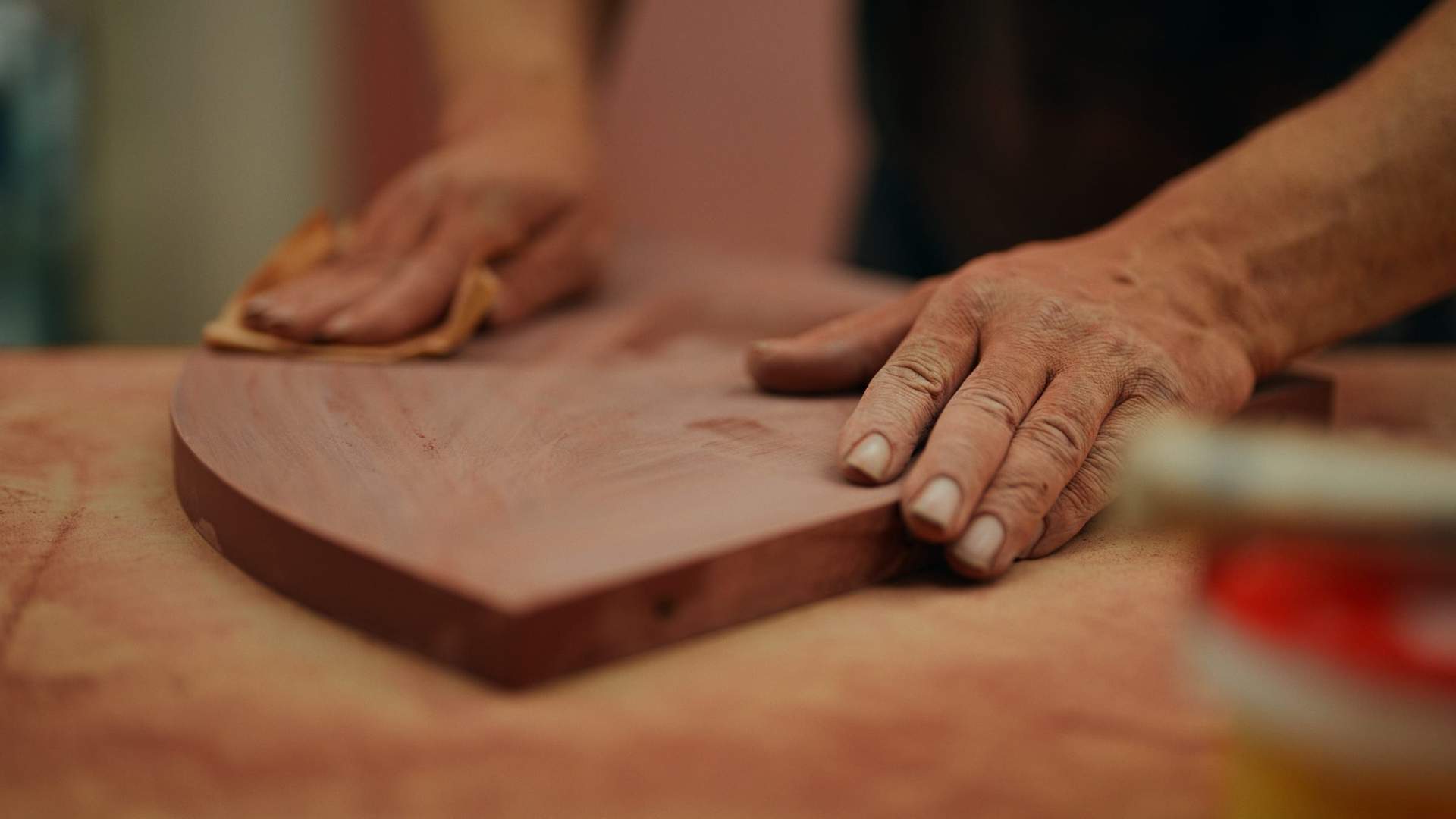
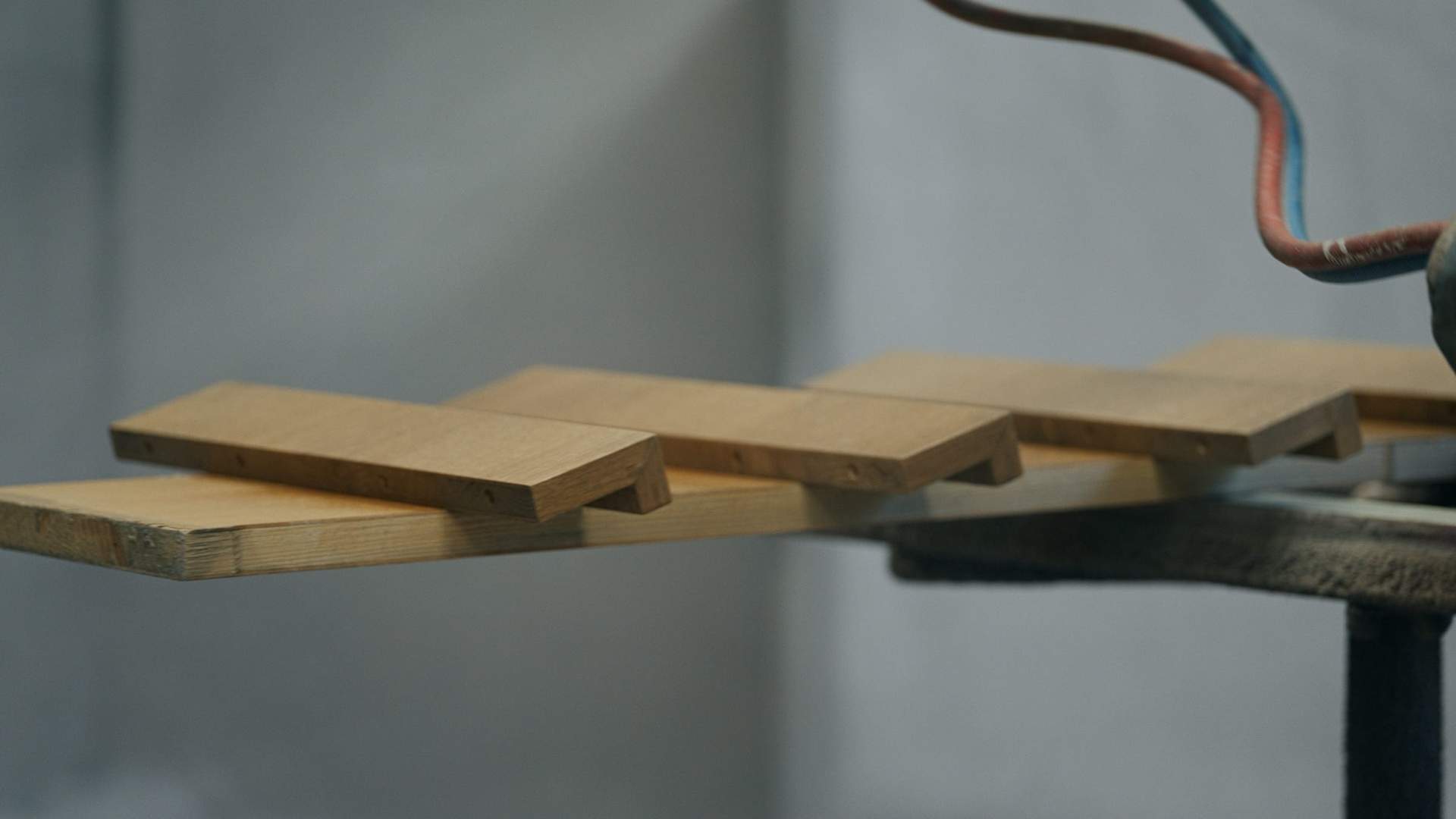
The edge is the detail that either betrays or confirms the quality of a piece: it is the first thing you touch and the last thing you look at. We apply edges with technologies that deliver a closed joint, with no visible glue line and no step under the fingertip, in full chromatic and material continuity with the surface.

Beyond aesthetics, edge banding is protection: it seals the panel against humidity, impact and the daily stress of hospitality and retail environments, which is far harsher than domestic use. It is why a piece still looks new after years of intensive service.

Thickness, radius and finish of the edge are chosen together with the designer according to the drawing: a minimal radius for a contemporary language, a more generous profile where the project asks for softness. Every batch is inspected visually and by hand, piece by piece.

Edge banding
03

Folding

Grooving and folding: monolithic volumes, continuous grain, no visible joints.

Folding is the process that produces a volume which looks carved out of solid material. The panel is V-grooved with extreme precision along the fold line and then closed onto itself: the resulting corner has no visible joint, and the grain runs uninterrupted from one face to the next.

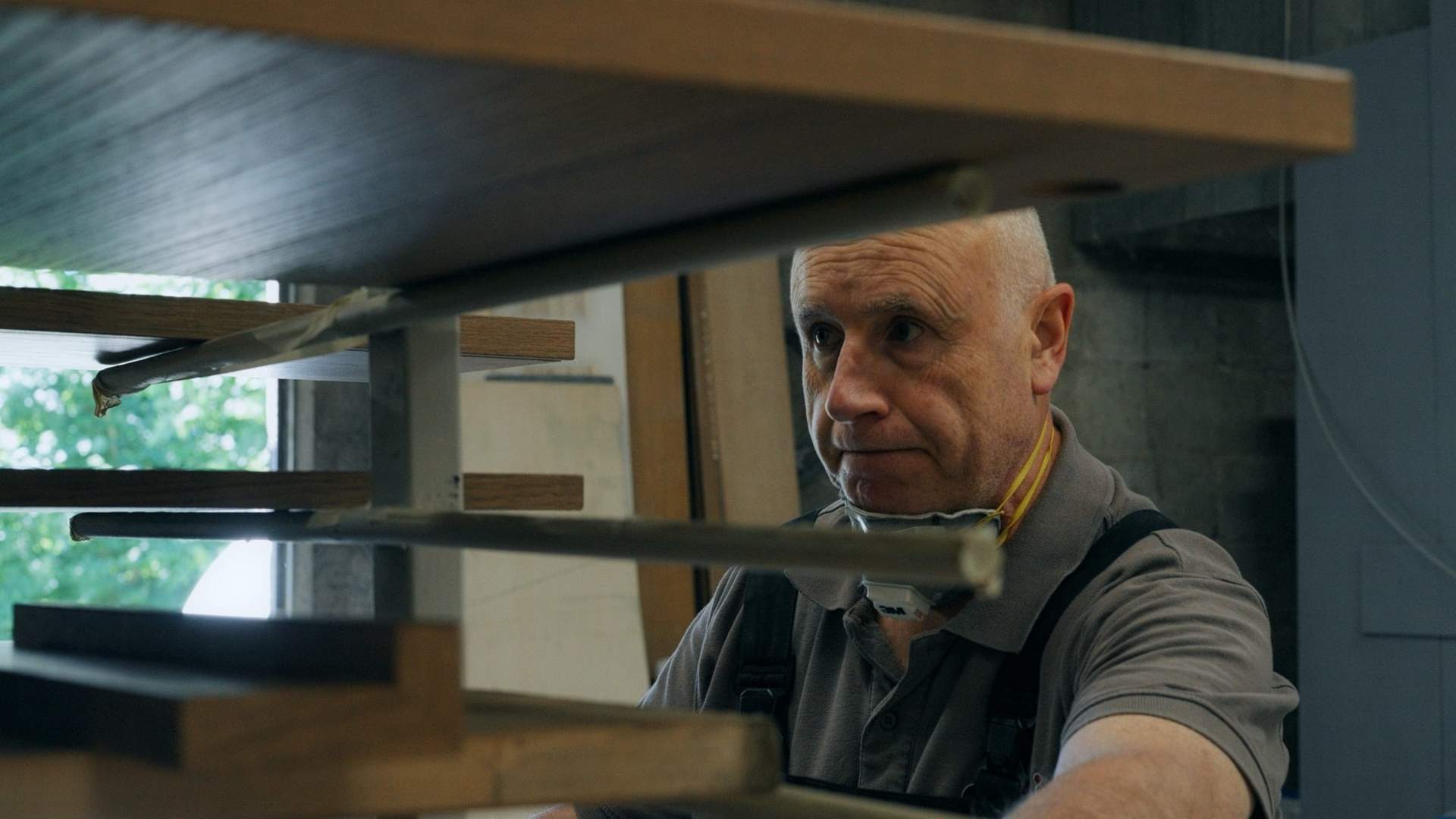
It is a technique that tolerates no approximation. Groove depth must be calibrated to the thickness and nature of the panel: too shallow and the fold will not close, too deep and the corner becomes fragile. That is why folding is designed into the shop drawings, never improvised on the shop floor.

The result is exactly what designers are after when they draw shells, islands, counters and suspended units: a clean object, read as a single block, with no metal profile or applied fillet breaking the surface.

Folding
04

Assembly

Workshop assembly, where the piece is tested before it ships.

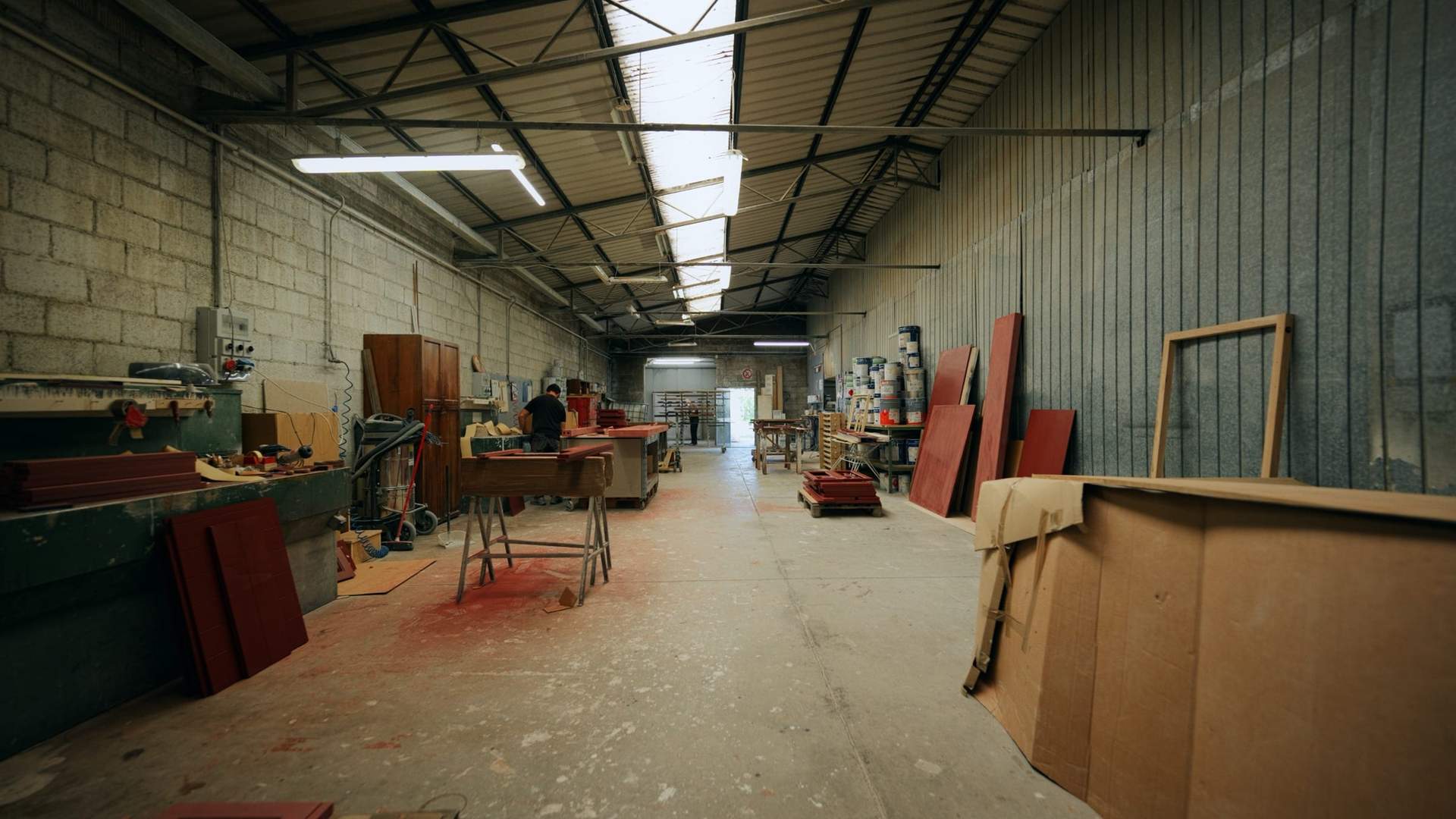
Assembly is the moment components become a piece of furniture. Every element is joined with structural rigour and adjusted by hand: alignments, reveals between doors, drawer travel, hardware hold, the behaviour of every moving part.

We assemble in the workshop even what will be taken apart again for shipping. It costs time, and it saves us from the one mistake that cannot be recovered: discovering a problem on site, thousands of kilometres away, when the project already has an opening date. Whatever leaves our workshops has been verified assembled first.

This is also where the aesthetic quality check closes: grain continuity between adjacent pieces, uniformity of finishes, no machining marks left behind. The piece is then packed to measure, with clear references for whoever will reassemble it during installation.

Assembly

Craft is one part of the method

What happens to the panel makes sense inside a process that starts with the concept and ends with installation. The rest of that journey, from design to site, is on the Method page.

See the method

Watch us work

The difference between a well-made piece and an exceptional one lies in details that rarely make it into a quote: the depth of a groove, the closing of an edge, the time spent assembling in the workshop what will be taken apart again. If you want to understand how we work, bring us a difficult project.